Eat your vegetables first: the simple Japanese habit that lowers blood sugar
What you eat matters most. But research, much of it from Japan, shows that the order you eat your food in, and how fast you eat, can also make a difference to blood sugar, fullness and weight.
Medically reviewed by Dr LJ Ncube, MBChB · Updated November 2026
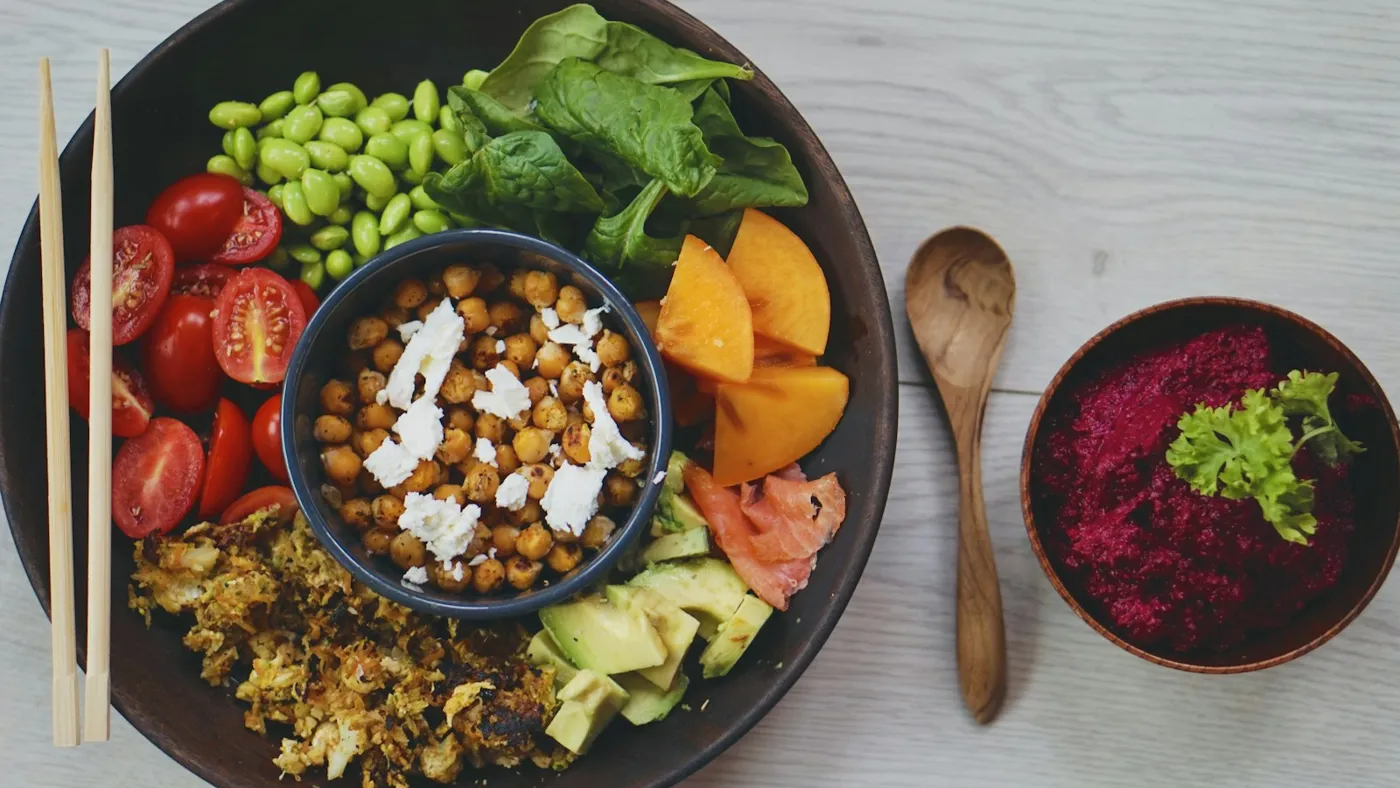
- Eat vegetables first, then protein, and leave starch such as sadza or rice until last
- This lowers the rise in blood sugar after the meal, which helps people with diabetes and prediabetes
- Eating slowly is linked to eating less and being less likely to gain weight
- These are small, free changes that work alongside a healthy diet, not instead of one
Vegetables first
In Japan, doctors have studied a simple instruction: eat your vegetables before your carbohydrates. In a trial of 101 people with type 2 diabetes, those told to eat vegetables first had better long-term blood sugar (HbA1c) over 2 years than those given a standard food-exchange diet plan: on average 6.8% versus 7.3%.
A longer follow-up by the same Japanese team found that eating vegetables before carbohydrates lowered the spike in blood sugar after meals, and the benefit lasted for 2.5 years.
Then protein, then carbs
A US study found similar results. When people with type 2 diabetes ate their protein and vegetables first and their bread last, their blood sugar after the meal was much lower than when they ate the same meal in reverse order.
Why it works: fibre and protein slow down how quickly food leaves the stomach, and they trigger GLP-1, the same fullness hormone that weight-loss injections copy.
- 1Vegetables firstCovo, rape, salad, tomato. Half your plate.
- 2Then proteinBeans, eggs, chicken, fish or beef. A quarter of your plate.
- 3Starch lastSadza, rice or bread. A quarter of your plate.
| On a Zimbabwean plate | Eat in this order |
|---|---|
| Sadza, covo and beef stew | Covo first, then the beef, then the sadza |
| Rice, chicken and salad | Salad first, then chicken, then rice |
| Bread, eggs and tomato | Tomato and eggs first, then the bread |
Eat slowly
Two large Japanese studies link eating speed with weight. In over 4,700 middle-aged adults, faster eaters had a higher BMI. In nearly 60,000 people with diabetes followed over 6 years, people who ate slowly were 42% less likely to be obese than fast eaters, and those who slowed down tended to lose weight.
Show as a table
| Fast eaters | 1 |
| Normal speed | 0.71 |
| Slow eaters | 0.58 |
Source: Hurst Y, Fukuda H. BMJ Open. 2018.
In a lab study, women ate less when they ate slowly, and felt more satisfied afterwards. Fullness signals from your gut take time to reach your brain, and eating slowly gives them a chance to catch up.
Simple tips
- Start each meal with a vegetable dish or salad
- Put your fork or spoon down between bites
- Aim for a meal to last at least 20 minutes
- Stop when you feel about 80% full. In Okinawa, Japan, this is called hara hachi bu
- Don't eat in front of the TV or your phone
Answer a few questions online and our doctor will reply on WhatsApp, usually within 24 hours.
Common questions
Does food order help if I don't have diabetes?
Most studies are in people with diabetes or prediabetes, and smaller studies suggest a similar effect in people without diabetes. It's a free, low-risk habit worth trying.
Do I need to eat less starch too?
For weight loss, the total amount you eat still matters most. Food order works best alongside sensible portions.
Is eating slowly enough to lose weight?
Probably not on its own, but it helps you eat less without feeling deprived.
Related
Sources
We base our guides on peer-reviewed research and guidance from health authorities. Where studies disagree or evidence is limited, we say so.
- Imai S, et al. A simple meal plan of 'eating vegetables before carbohydrate' was more effective for glycemic control than an exchange-based meal plan in Japanese patients with type 2 diabetes. Asia Pac J Clin Nutr. 2011. PubMed
- Imai S, et al. Effect of eating vegetables before carbohydrates on glucose excursions in patients with type 2 diabetes. J Clin Biochem Nutr. 2014. PubMed
- Shukla AP, et al. Food order has a significant impact on postprandial glucose and insulin levels. Diabetes Care. 2015. PubMed
- Kubota S, et al. A review of recent findings on meal sequence. Nutrients. 2020. PubMed
- Otsuka R, et al. Eating fast leads to obesity: findings among middle-aged Japanese men and women. J Epidemiol. 2006. PubMed
- Hurst Y, Fukuda H. Effects of changes in eating speed on obesity in patients with diabetes. BMJ Open. 2018. PubMed
- Andrade AM, et al. Eating slowly led to decreases in energy intake within meals in healthy women. J Am Diet Assoc. 2008. PubMed
This guide is general information, not advice for your situation. Speak to a doctor before starting or changing any medicine.